


 US
site
US
site
 UK
site
UK
site
 AU site
 CA
site
CA
site


Kids are bursting with ideas, but getting those ideas onto the page can feel like a puzzle for both them and the grownups trying to help. Some kids freeze at the sight of a blank page, and others want to write but don't quite know how to shape their thoughts.
So, what are the best writing activities for kids? We've found that the magic happens when writing feels like play, when kids get simple prompts that spark imagination, when vocabulary becomes something they're excited to use, and when stories grow through both structure and spontaneity.
In this article, we explore fun, confidence-building activities that make writing something kids actually look forward to, while giving them the tools they need to grow as storytellers.
Table of contents:
15 Best Writing Activities for Kids
Kids learn best when writing feels fun, inviting, and full of possibilities. These activities give them simple ways to jump in, explore their ideas, and build confidence one small step at a time:
1. Story Cards
Story cards are one of the simplest and most motivating ways to spark a child's imagination. They offer a visual or verbal cue that gets them writing right away. Our own Storyteller's Card Game is a great example. It combines vivid vocabulary cards with prompts that inspire everything from silly scenes to dramatic adventures.
Story cards work because they remove the fear of starting. Instead of facing a blank page, kids get a playful nudge that helps them focus on generating writing ideas for kids, not worrying about perfection.
How to do it:
- Invite your child to pick a handful of vocabulary cards or one story-prompt card.
- Set a short timer, like 10–15 minutes.
- Ask them to write a story or scene inspired by the prompt.
- Read the story together and talk about one part they especially enjoyed creating.

2. Daily Vocabulary Word Play
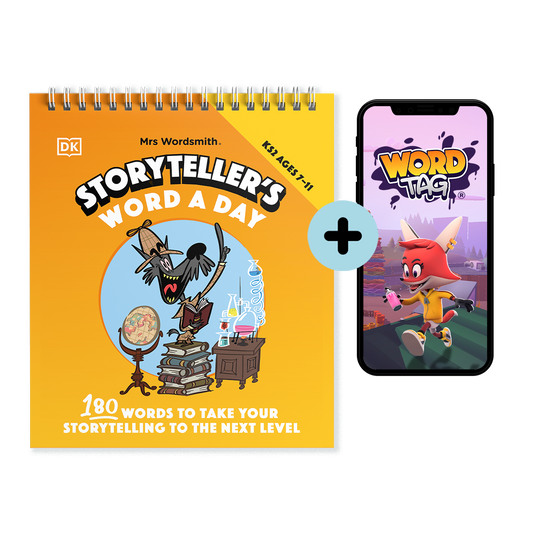
A strong vocabulary helps kids write with clarity and flair. Our Storyteller's Word a Day flipbook turns vocabulary building into an engaging daily ritual. Each word is paired with lively illustrations and examples that make language feel exciting.
Kids quickly learn how powerful a well-chosen word can be, which strengthens both their creative and academic writing.
How to do it:
- Turn to the day's word in the flipbook.
- Talk about what it means and where it might fit in a sentence or story.
- Ask your child to write a short sentence or paragraph using the word.
- At the end of the week, pick one favorite sentence and revise it together.
3. Collaborative Story Chains
Writing doesn't always have to be a solo activity. When kids write collaboratively, they learn how stories evolve, how different voices shape a narrative, and how fun it is to build something together. This activity is great for siblings, friends, or one-on-one time with you.
Working together helps kids gain confidence and stretch their creativity because they're responding to someone else's ideas instead of starting from scratch.
How to do it:
- Start a story with one sentence.
- Take turns adding a new sentence each time.
- Continue until the story feels complete—or delightfully chaotic.
- Read it aloud and enjoy how unexpected it became.

4. Mad-Lib Style Fill-In Stories
Fill-in-the-blank stories turn writing into a playful guessing game. Kids learn how verbs, adjectives, and nouns shape meaning - and they get to laugh at the unexpected results. It's a low-pressure way to practice parts of speech while also exploring how language affects tone.
This activity helps kids become more thoughtful about word choice because they see, instantly, how swapping in different words can change everything.
How to do it:
- Write a short paragraph and leave blanks where key words should go.
- Ask your child for random words to fill in.
- Read the finished story aloud.
- Invite them to revise one or two words to make the story stronger.
5. Story-Building With a Workbook
Once kids are comfortable generating ideas, they're ready to explore structure: beginnings, middles, endings, character motivations, and more. Our workbook How to Write a Story (Grades 3–5) gives kids the tools to plan, organise, and refine their stories with confidence.
Structured guidance from writing worksheets helps kids understand how stories work. They learn how to shape their ideas into something cohesive, which is incredibly empowering once they're ready for longer pieces of writing.
How to do it:
- Start with one section of the workbook at a time.
- Work through the guided activities together, discussing examples and ideas.
- Encourage your child to plan a story using the templates and frameworks provided.
- Let them draft at their own pace, then revisit sections for revision.

6. Free-Writing Bursts
Free-writing encourages kids to write without judgment. When the goal is simply to keep writing, kids stop overthinking and start exploring. It's one of the best ways to build fluency, creativity, and confidence.
Kids learn that their ideas don't have to be perfect to be worth writing down - an essential mindset for strong, resilient writers.
How to do it:
- Choose a simple prompt such as “If I could time-travel…” or “The best invention in the world would be…”
- Set a timer for 10–15 minutes.
- Encourage your child to write nonstop until the timer ends.
- Have them pick one sentence to revise or expand.
7. Character-Creation Challenges
Kids love inventing characters, and character-building gives them an easy way into storytelling. When children imagine how someone talks, thinks, and reacts, they naturally start building little plots around that character. It feels like play, but they're practising voice, description, and point of view.
Character-creation challenges also give shy writers something safe to focus on; they don't have to write about themselves, only their made-up person.
As characters grow more detailed, kids start asking questions about what might happen next and why. Those questions quietly introduce ideas like motivation, conflict, and change.
How to do it:
- Ask your child to invent a brand-new character.
- Jot down a few quick facts about this character.
- Set a short timer and write a scene together.
- Talk about what the character might do next.

8. Nature-Inspired Writing Walks
A short walk can unlock tons of writing ideas. When kids step away from the table and look around, they suddenly have real things to describe. They notice sounds, colors, textures, and tiny details that would never appear from memory alone.
Nature-inspired writing walks help children understand how to use their senses in writing, which makes stories and descriptions feel more vivid.
This activity is especially helpful for energetic kids who struggle to sit still. Moving first and then writing often makes it easier for them to focus. It turns everyday surroundings into a source of inspiration they can return to again and again.
How to do it:
- Take a short walk around your yard, street, or park.
- Ask your child to point out interesting sights and sounds.
- Back at home, have them write about one thing they noticed.
- Encourage them to include at least three sensory details.
9. Dialogue-Only Scenes
Dialogue-only scenes let kids focus on how characters speak and react without worrying about long descriptions. Because they only write what the characters say, it feels quick, playful, and manageable.
Children naturally start experimenting with voice, humor, and conflict as they decide who says what. This kind of practice also helps them see how conversations can move a story forward.
Once they're comfortable, they can easily add actions and thoughts around the dialogue to turn the scene into a full story. It's a simple way to help kids understand how character relationships shape what happens next.
How to do it:
- Give your child a simple scenario, such as two friends with a secret.
- Ask them to write the entire scene using only dialogue.
- Read it together and talk about what you learn from the conversation.
- Invite them to add actions or thoughts to expand the scene.

10. Picture-Prompt Adventures
Picture prompts are perfect for kids who freeze at a blank page. An image gives them something concrete to react to, so ideas start flowing more easily. They can latch onto a tiny detail, a facial expression, or a strange object and build a whole situation around it. This activity strengthens observation skills and descriptive writing at the same time.
It also helps reluctant writers realise they don't have to invent everything on their own; they can use what they see as a starting point. Over time, kids become more confident, turning everyday images into full stories.
How to do it:
- Choose an interesting picture from a book, magazine, or printout.
- Give your child a minute to study the image quietly.
- Ask them to write a story or descriptive paragraph inspired by what they see.
- Encourage them to imagine what happened just before and just after the picture.
11. List-to-Story Transformations
Lists feel simple and approachable, which makes them a great starting point for kids who get overwhelmed by full paragraphs.
When children create lists about things they like, places they've been, or objects they find interesting, they're gathering raw material for writing without even realizing it. Turning those lists into stories helps them practise organization, sequencing, and expanding ideas.
Kids start to see how small details can spark bigger narratives, which boosts confidence and creativity. This activity is especially helpful for reluctant writers who need a gentle way to begin shaping ideas.
How to do it:
- Ask your child to make a list of five things, such as foods or favorite places.
- Choose one item from the list together.
- Set a timer and write a short story inspired by that item.
- Talk about how the list helped spark their idea.

12. Rewrite-the-Ending Challenges
Kids often know stories inside and out, which makes rewriting the ending a fun way to practise creativity and critical thinking.
When they change how a story ends, they explore new possibilities and consider how character choices shape the outcome. This activity helps children think about cause and effect without feeling like they're doing something formal or complicated.
It also encourages them to trust their own ideas because there's no single right answer. Rewriting an ending allows kids to experiment with humor, surprise, or even a completely new direction, building storytelling confidence along the way.
How to do it:
- Choose a familiar story, movie, or fairy tale.
- Ask your child to imagine a different ending.
- Have them write the new ending in a short paragraph or scene.
- Talk about how their version changes the story.
13. Sensory Writing Mini-Challenges
Sensory writing helps kids create more vivid descriptions by focusing on what something looks, sounds, smells, tastes, or feels like.
Children often remember details more clearly when they use their senses, which makes writing feel more grounded and exciting. Mini-challenges break the task into small, manageable pieces so kids don't feel overwhelmed.
Over time, they begin to understand how sensory details make their stories stronger and easier for readers to imagine. This activity is great for both fiction and nonfiction, and it's a helpful tool for kids who tend to write very short or vague sentences.
How to do it:
- Choose an everyday object, like an orange or a seashell.
- Ask your child to describe it using at least three senses.
- Set a timer and have them write a short description or scene.
- Encourage them to read it aloud and notice the sensory words.

14. Sentence-Expansion Exercises
Some kids write very short sentences because they're unsure how to add detail. Sentence-expansion exercises give them a simple and confidence-building way to practise adding more information.
Kids take a basic sentence and gradually expand it with who, what, when, where, why, or how. This activity helps them learn how to develop richer, more complete ideas while still keeping things manageable.
It's fantastic for building fluency, improving clarity, and helping children feel more comfortable writing longer pieces.
How to do it:
- Start with a simple sentence, such as “The dog ran.”
- Ask your child to add details one step at a time.
- Have them rewrite the sentence with all the new information.
- Invite them to turn the expanded sentence into a short scene.
15. Writing From Different Perspectives
Perspective-taking helps kids think deeply about character, emotion, and point of view. When they write from someone else's perspective, they must imagine what that character knows, feels, or wants.
This boosts empathy and encourages more thoughtful writing. Kids also learn how a story changes depending on who tells it, which is an important part of narrative understanding.
This activity is especially fun when kids choose unexpected perspectives, like writing as a pet, a favorite toy, or even an object in their room. It gives them permission to play while still practising valuable storytelling skills.
How to do it:
- Choose a simple situation, such as “A family is getting ready for school.”
- Ask your child to pick a character or object to narrate the moment.
- Have them write a short scene from that perspective.
- Talk about how the story would change with a different narrator.
Need more guidance? Read our breakdown of what age do kids start writing.

Conclusion
Helping kids grow as writers starts with giving them fun, approachable ways to explore ideas and try out new skills. When children play with prompts, experiment with vocabulary, write with others, and use their senses to shape stories, writing feels exciting instead of intimidating.
These activities show kids that their thoughts matter and that writing can be something they look forward to. With regular chances to practise in relaxed, enjoyable ways, their confidence builds naturally.
If you'd like tools and writing tips for kids that make these moments even more engaging, explore our writing resources at Mrs Wordsmith and find something your young storyteller will love.




 https://mrswordsmith.com
Comment
Leave a comment