


 US
site
US
site
 AU site
 CA
site
CA
site
 EU
site
EU
site


Reading can feel confusing for children at first, especially when words don’t behave the way they expect. Some try to guess. Others get stuck and lose confidence. That’s where the clear, structured approach of phonics makes all the difference.
So, what is phonics? It’s the system that helps children understand how letters connect to sounds, how those sounds build words, and how they can use that knowledge to read and write with confidence. It’s practical, it’s powerful, and it gives kids a real sense of control over what they’re learning.
In this article, we’ll walk through what phonics is, why it matters so much for early reading, how it works step by step, and how you can support your child at home in a way that feels simple and doable.
Table of contents:
- Why is Phonics Important?
- How Does Phonics Work?
- Types of Phonics
- How to Teach Phonics to Your Child
- Conclusion
What is Phonics, Exactly?
Phonics is the method of teaching children how letters and sounds connect so they can read and write words.
In simple terms, it teaches kids that letters represent sounds, and those sounds can be blended together to form words. When a child sees the word cat, phonics helps them break it into /c/ /a/ /t/ and then blend those sounds back together.
We often describe it as giving children a toolkit. Instead of memorizing every word they see, they learn how to figure words out independently. That change is incredibly empowering.

Why is Phonics Important?
So, what is phonics in reading used for, and why is it important? Phonics is important because it gives children the ability to decode words.
Decoding means looking at a word and working out how to read it using sounds. Without that skill, children rely on guessing or memorization. That might work for a handful of words, but it quickly becomes overwhelming.
When phonics is taught well, children can read unfamiliar words with confidence, learn spelling, and build fluency over time.
Research consistently shows that strong phonics instruction lays the foundation for long-term reading success. And once that foundation is in place, comprehension, vocabulary, and confidence all grow faster.
How Does Phonics Work?
Phonics works by teaching children the relationship between phonemes (sounds) and graphemes (letters or letter groups).
It usually starts small. Children learn individual letter sounds first. Then they begin blending those sounds together to read simple words. For example, /m/ + /a/ + /t/ becomes mat, while /s/ + /u/ + /n/ becomes sun.
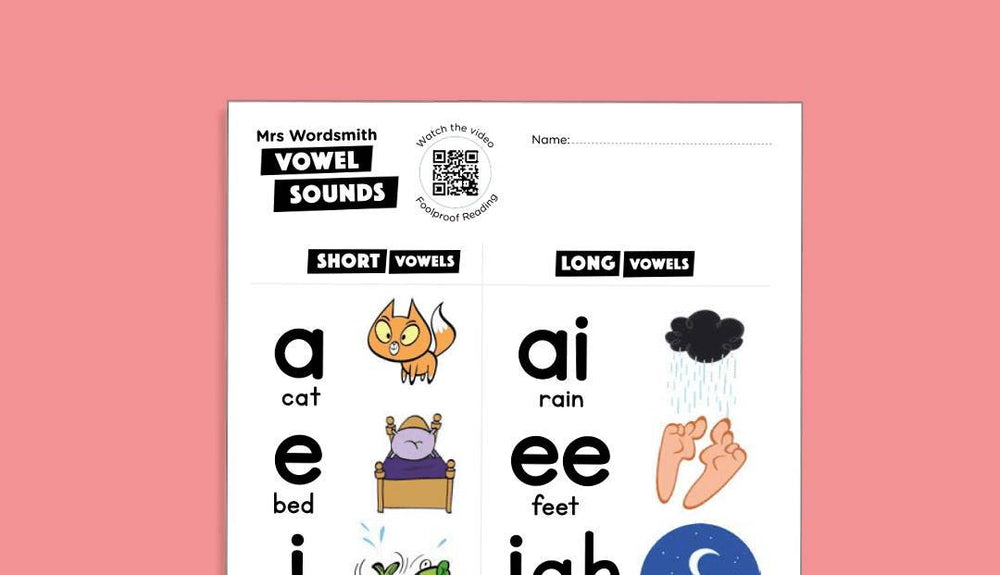
Over time, they learn more complex patterns. Digraphs like sh or ch. Long vowel sounds. Silent letters. It builds step by step.
The key is consistency. The more children practice connecting sounds to letters, the more automatic it becomes. Eventually, they don’t even think about it. They just read.
To set yourself and your child up for the most success, we recommend understanding when to start reading to your baby first. You’d be surprised how much of a difference reading aloud from an early age makes.

Types of Phonics
There isn’t just one way to teach phonics. Different approaches exist, and each one supports learning in a slightly different way.
Synthetic Phonics
This is the approach most schools and structured programs rely on, and for good reason. Children learn individual sounds first, then practice putting them together to read words. It’s clear, direct, and gives children a reliable strategy they can use again and again.
For example, a child might learn the sounds /c/, /a/, and /t/ on separate days. Then comes the magic moment. They blend those sounds and read cat for the first time.
That sense of “I did it myself” is huge. As more sounds are introduced, children can tackle more words without needing help. It builds independence quickly, which is exactly what early readers need.
Analytic Phonics
Analytic phonics takes a slightly different route. Instead of starting with individual sounds, children begin with whole words they already recognize. Then they look for patterns within those words.
So, if a child knows cat, bat, and hat, you can guide them to notice the shared -at ending. That pattern becomes a shortcut. The next time they see mat, they can use what they’ve already learned to figure it out. It feels familiar, which makes new words less intimidating.
This approach works well alongside others because it strengthens pattern recognition. Children start to see reading as something predictable rather than random.

Analogy Phonics
Analogy phonics builds directly on what children already know. It encourages them to use familiar word parts to unlock new words. If they can read cat, they’re already halfway to reading sat, mat, or rat.
It’s a simple idea, but it’s powerful. Children begin to notice chunks of words, not just individual letters. That speeds things up. Instead of sounding out every single letter, they can lean on patterns they’ve seen before.
You might say, “You know cat. What happens if we change the first sound to /m/?” Suddenly, mat appears. That kind of discovery keeps children engaged and makes reading feel like something they can figure out on their own.
Embedded Phonics
Embedded phonics happens during real reading. Instead of separate phonics lessons, children learn sound-letter relationships while reading books or listening to stories.
For example, if a child comes across the word ship, you might pause and point out the sh sound. Then you keep reading. It’s quick. It’s connected to meaning. And it shows children how phonics works in real situations.
This type of phonics method feels natural because it’s tied to actual reading experiences. It helps children see that phonics isn’t something separate from reading. It’s part of it. Many families and teachers use this alongside more structured methods to give children both clear instruction and real-world practice.

How to Teach Phonics to Your Child
Teaching phonics at home doesn’t have to feel overwhelming. With the right approach, it can be simple, effective, and even fun:
1. Start With Letter Sounds
Start with the sounds letters make, because that’s what children actually use when they begin reading. When your child learns that b says /b/ and m says /m/, they’re already building the foundation for sounding out words later. Letter names can come in, but sounds should lead. It keeps things clear and practical.
Keep sessions short and consistent. A few focused minutes each day works well. You can repeat sounds together, then look for objects around the house that match. Think socks for /s/ or a cup for /c/. These quick, playful moments help the learning stick.
2. Practice Blending Early
Once your child knows a handful of sounds, start blending them into simple words like sat, pin, or dog. This is where things start to click. Suddenly, they’re not just learning sounds, they’re reading.
Go slowly at first. Stretch the sounds out, then bring them together. You might say /s/ ... /a/ ... /t/, then speed it up until it becomes sat. It can feel awkward in the beginning and that’s completely normal. With repetition, it becomes smoother and more natural.
3. Use Decodable Books and Worksheets
Children learn best when they can apply what they’ve just been taught. That’s where decodable books and phonics worksheets come in. They focus on specific sound patterns, so children aren’t guessing or feeling stuck.
For example, our Readiculous Readers books are designed to reinforce key phonics skills in a clear, structured way. Children read words that match what they’ve learned, which helps build confidence quickly. Worksheets can support this by giving extra practice with matching sounds, spotting patterns, and building fluency in short bursts.

4. Make It Interactive
Phonics sticks better when children are actively involved. You can use magnetic letters to build words, play quick sound games, or flip through flashcards together. Keep it moving. Keep it fun.
You can also bring phonics into everyday life. Spot a word on a sign. Sound it out together. Even writing a simple word on paper and reading it aloud can turn into a quick learning moment. Celebrate the small wins. That excitement helps children stay motivated.
5. Build Gradually
Phonics works best when it’s taught step by step. Start with individual sounds, then move into blending, and later introduce patterns like sh, ch, or longer vowel sounds. Each stage builds on the last.
It can be tempting to rush ahead, but taking your time pays off. When children feel secure with the basics, they handle more complex words with far more confidence. Progress might feel slow at times, but those steady steps lead to strong, lasting reading skills.
Conclusion
Phonics gives children a clear path into reading. It takes what can feel confusing and turns it into something logical and manageable. When kids understand how sounds and letters work together, they stop guessing and start reading with confidence. That’s when real progress happens.
If you’re ready to support your child’s reading journey, explore our Mrs Wordsmith resources and bring phonics to life with tools designed to make learning stick.



 https://mrswordsmith.com
Comment
Leave a comment